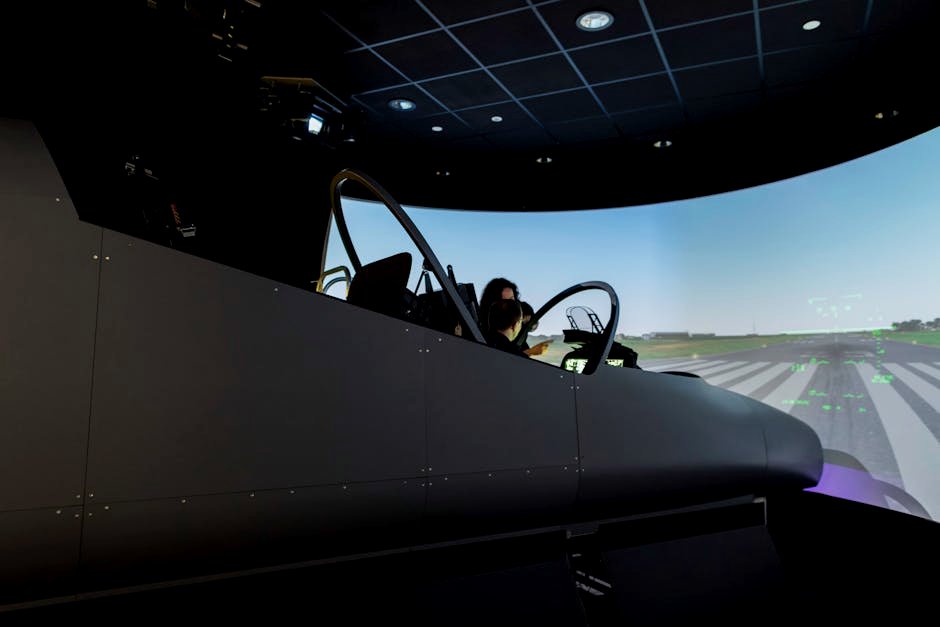
Examination of pilot training requirements, type rating processes, and recurrent training standards across international aviation operations.
Qualifying a crew to fly internationally involves far more than a single licence, spanning type ratings, recurrent simulator work, and standardized competency checks, all of which this examination unpacks. The training benchmarks discussed correspond to the global standards maintained by ICAO, and the operational illustrations draw on programs reported at Lufthansa and ANA, two carriers with mature international training pipelines.
Dispatch Reliability and Crew Readiness
A well-trained crew steps onto an aircraft that is itself expected to perform, and on current flagship Airbus widebodies dispatch reliability runs above 99.5 percent. British Airways keeps it there by feeding usage-trend data and continuous component condition tracking into its planning, which lets maintenance intervals open up without compromising readiness.
Airframe Technology Crews Must Master
Part of what crews learn is the airframe itself. The shift from aluminium to composite construction takes roughly 18 percent out of structural weight, and the resulting efficiency is felt most acutely on a trans-continental leg of the Frankfurt to Tokyo kind. Crews operating these routes work hand-in-glove with controllers, a relationship we detailed in Air Traffic Control Systems and International Operations, which pairs well with this piece.
Cabin Systems, Certification and Renewal
Cabin systems matter to crew endurance as much as to passengers. On current Airbus types the cabin is held at the equivalent of 6,000 feet, down from the 8,000 feet older jets ran, and across sectors of 11 to 13 hours that change noticeably blunts fatigue.
The flight controls those crews manage are certified to demanding rules. The FAA’s Part 25 and EASA’s CS-25 each insist on redundancy, so the avionics classed as critical, here including GE Aviation subsidiaries, are duplicated to a depth of three or four.
The fleet crews qualify on is shifting as well. British Airways has put fuel efficiency per seat at the front of its renewal priorities, with the older quad-engine aircraft set for retirement inside five fiscal years.
Through the back half of the decade, the broad expectation is that engine design will continue pushing the bypass ratio upward.